We analyze gas, electric, stream, water and sewer bills with proprietary regression analysis — and pursue every recoverable dollar.
A utility bill audit is a line-by-line review of a business’s electric, gas, water, and sewer invoices to identify billing errors, incorrect rate classifications, and unnecessary charges. The goal is twofold: recover money already overpaid through refunds or credits, and correct the account so the same errors don’t recur on future bills. Utility bill audits are typically performed by a specialized third-party firm rather than an internal accounting team, since they require detailed knowledge of utility tariffs, rate structures, and billing rules that most finance departments don’t track day to day.
Utility companies bill millions of accounts across constantly changing rate schedules, tariffs, and tax rules, so billing errors are common rather than rare. A utility bill audit exists to catch what an internal accounting team, focused on paying bills on time rather than auditing their accuracy, typically doesn’t have the bandwidth or specialized rate knowledge to catch.
A standard utility bill audit is a routine check of recent invoices for basic errors. A forensic utility bill audit is a deep, historical investigation that scans years of complex data to recover hidden overcharges.
The difference decides how far back a refund can reach. A standard review corrects what is wrong on the current bill. A forensic review pursues errors that have been repeating for years, and the refund for the whole period. UtiliSave’s audits are forensic.
Any commercial, industrial, institutional, or multifamily property that has paid utility bills for a year or more is a reasonable candidate. Properties with the highest error rates and largest recoveries tend to share certain traits: multiple meters, high or continuous usage, or complex rate structures.
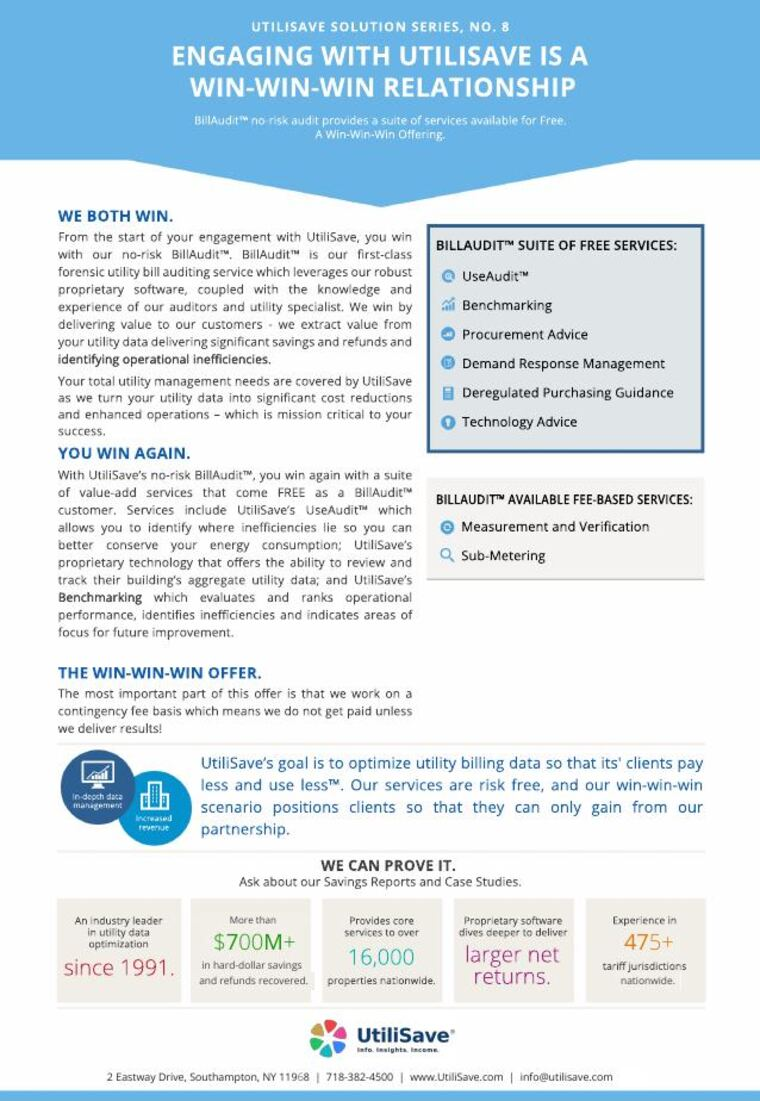
Most utility bill audits are offered on a contingency-fee basis: there is no upfront cost to the business, and the audit firm is paid only a percentage of the refunds and savings it actually recovers. If an audit finds no recoverable errors, the business owes nothing. This structure exists because the size of any recovery can’t be known before the audit is done, so contingency pricing ties the firm’s fee directly to the results it delivers.
The wrong rate class, charged for years unnoticed
Billing for meters that no longer exist
Sewer rates charged on water that should have received an exemption
One peak month can inflate your bill for the next year
Exemptions you qualify for, sitting unclaimed
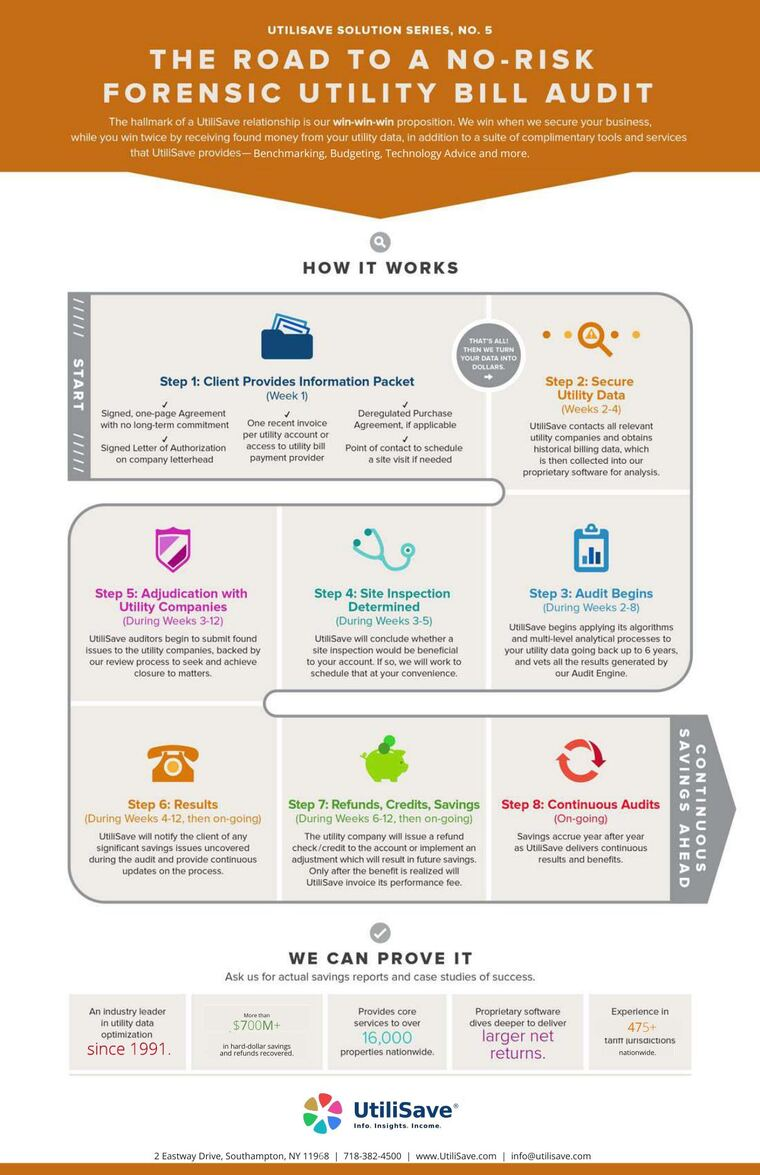
Every bill, every meter, every account — gathered in full
A forensic, line-by-line review that finds what others miss
We fight the utility on your behalf, so you don’t have to
Refund checks issued and lower bills locked in for good
On a contingency-fee model, there is no upfront cost. The audit firm is paid a percentage of the refunds and savings it recovers, so cost is directly tied to results. If nothing is recovered, there is typically no fee.
Timelines vary by account complexity, number of meters, and how quickly the utility responds to information requests. Audits can range from a couple of months to considerably longer for large, multi-account portfolios.
It depends on account volume and usage. Properties with multiple meters, high usage, or complex rate structures tend to see the largest recoveries. But because most audits are risk-free and contingency-based, any business paying commercial utility rates for a year or more can be a reasonable candidate for a review.
Typically account numbers and a set of recent utility invoices per account. Most audit firms handle the rest, including contacting the utility directly for historical account data.
They fall into a consistent set of categories: the wrong rate class, phantom charges, sewer billing errors, demand charge miscalculations, and unapplied tax exemptions. The five we see most often are broken out above.